

Vivo V80 launches in India with a huge 7,200mAh battery and ZEISS cameras
The Vivo V80 is a camera-focused smartphone that brings a refreshed design, ZEISS cameras, 4K Cinematic Video and a massive 7,200mAh battery. While it keeps the Snapdragon 7 Gen 4 from the V60 and V70, Vivo has focused on improving the overall experience rather than raw performance. It has launched
Millan Wafula
Tech Reviewer
Vivo V80 launches in India with a huge 7,200mAh battery and ZEISS cameras
Vivo has officially launched the new V80 in India, continuing the company's focus on cameras and content creation while bringing a refreshed design, a much larger battery and improved video capabilities.
At first glance, the V80 looks like a significant upgrade over the V70. But look a little closer and the story is more about refinement than raw performance.
The phone starts at ₹62,999 in India for the 8GB/128GB model, which converts to roughly KES 84,900. The 8GB/256GB version costs ₹69,999 (about KES 94,300), while the 8GB/512GB model costs ₹79,999 (about KES 107,800). Those are direct conversions, so Kenyan retail prices will likely be higher once taxes and distribution costs are factored in.
The V80 goes on sale in India on October 13.
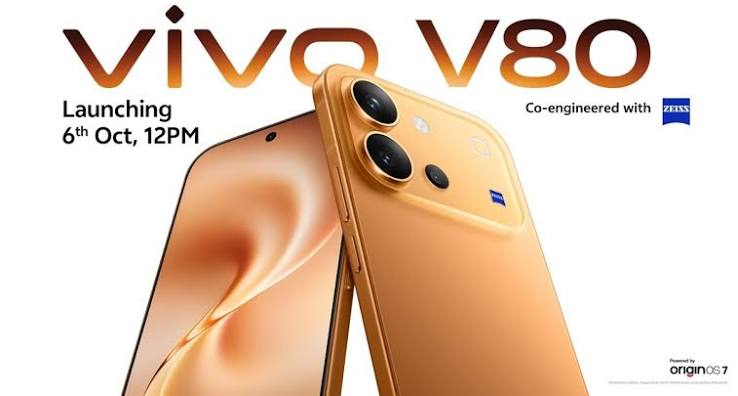
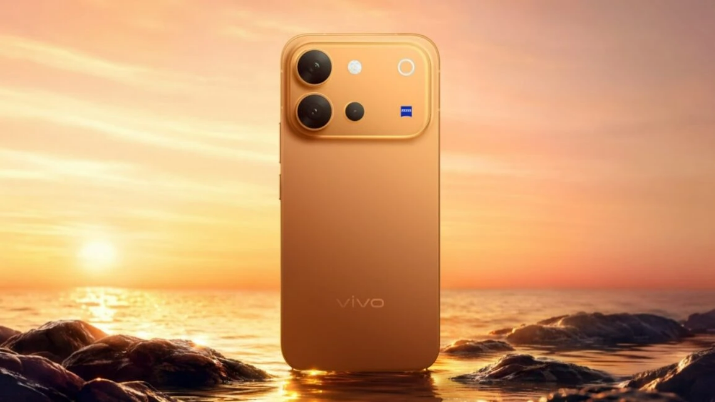
A new design
The most obvious change is the design.
Vivo has moved to a cleaner camera module and a new one-piece glass design that gives the V80 a more premium appearance. The result is certainly more distinctive, although the overall aesthetic may remind you of another very fruity familiar smartphone design language.
The phone is just 7.69mm thick and weighs 203 grams, while still managing to carry a substantially larger battery than its predecessor. It also comes with IP68 and IP69 dust and water resistance.
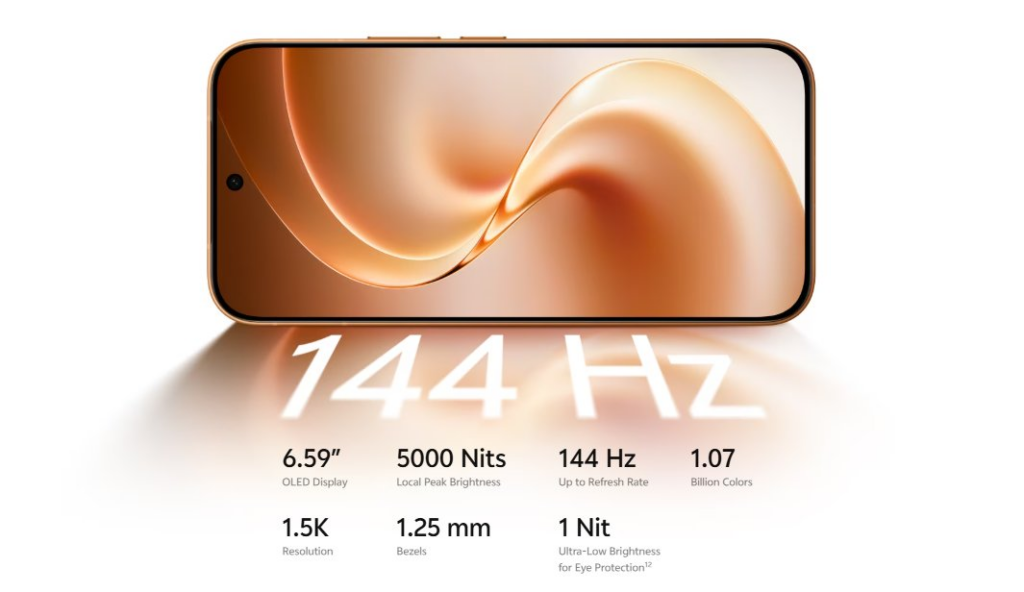
A familiar display and processor
The V80 retains the 6.59-inch 1.5K AMOLED display with a 144Hz refresh rate. Vivo claims peak brightness of up to 5,000 nits, although the phone's high-brightness mode is rated at 1,800 nits.
Underneath, things are even more familiar.
The V80 uses Qualcomm's Snapdragon 7 Gen 4, the same processor found in the V60 and V70. This means the V80 isn't really a performance upgrade over the V70.
In fact, the V70 paired the chip with LPDDR5X RAM and UFS 4.1 storage, while the V80 uses LPDDR4X RAM and UFS 3.1. So if raw performance is your priority, there isn't much reason to upgrade from the V70.
Vivo is instead putting its effort into everything surrounding the processor.
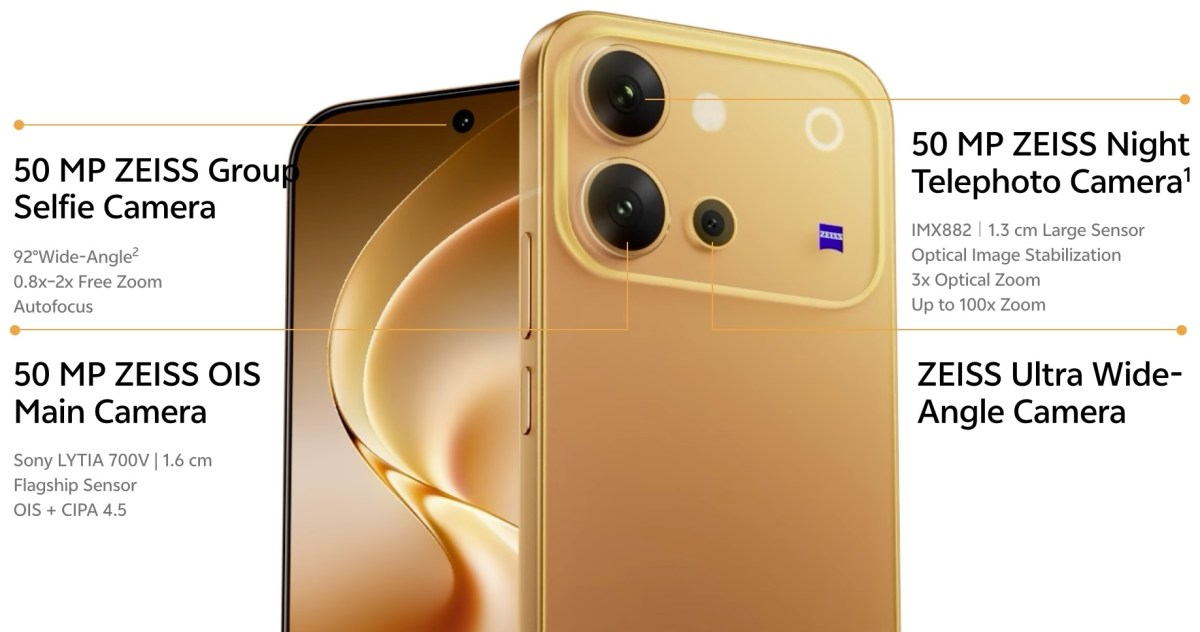
ZEISS cameras remain the star
As expected from a V-series phone, cameras are still the main attraction.
The V80 has a 50MP main camera with OIS, a 50MP ZEISS telephoto camera and an 8MP ultrawide, alongside a 50MP autofocus selfie camera.
The hardware is very similar to the V70, but Vivo has expanded its video capabilities. The V80 can now record 4K Cinematic Video, with cinematic effects and LUTs designed to give smartphone footage a more polished look.
Vivo is also adding more AI-powered photography and editing features, continuing its push to make the V series appealing to people who create content rather than simply take photos.
A much bigger battery & OriginOS 7
The biggest hardware upgrade is arguably the battery.
The V80 packs a massive 7,200mAh battery, up from the 6,500mAh battery in the V70 and V60. It still supports 90W FlashCharge, so Vivo has increased capacity without sacrificing charging speed. And that is a significant change for a phone that remains less than 7.7mm thick.
And, unlike some manufacturers that have decided chargers are now optional, Vivo continues to include one in the box.
The V80 also launches with OriginOS 7 based on Android 17, bringing Vivo's latest software experience to the V series. This is another area where the V80 moves beyond the V70, which launched with the previous generation of Vivo's software.
Is the V80 a big upgrade?
Not exactly.
The V80 is more of an evolution than a performance-focused successor. The Snapdragon 7 Gen 4 has now appeared across three generations of the V series, while the display and core camera hardware remain largely unchanged.
But Vivo has improved some areas: there's a much larger battery, a refreshed design, newer software, better video capabilities and continued ZEISS camera development.
That makes the V80 an interesting proposition. Vivo isn't trying to win the performance battle with this phone. Instead, it is taking an already capable platform and making the overall experience better.
The biggest question now is Kenyan pricing.
The Indian price looks competitive on paper, but the V80's success in Kenya will ultimately depend on how much it costs once it arrives here. Vivo has not yet announced Kenyan availability or pricing.

